

Carlton
1966–1968
11Games
9Goals

 12
Bill
#12185 cm80 kgCentre Half Forward1966 and 1968
Carlton
1966–1968
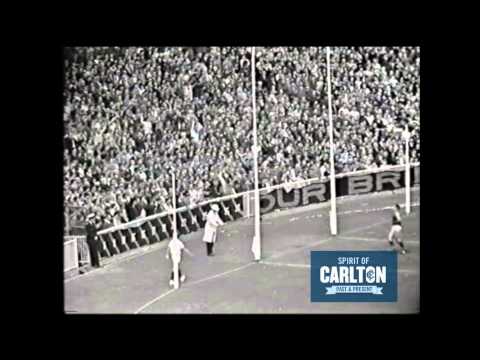
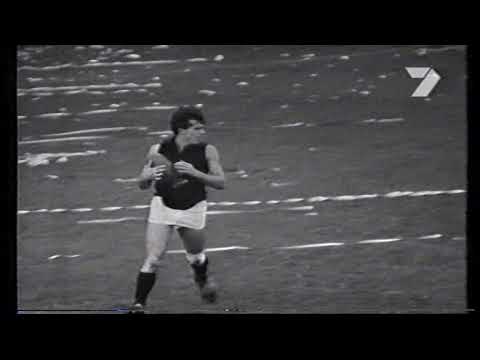
Bill Bennett played at centre half-forward in Carlton’s 1968 Premiership team in just his 11th VFL game. Although he was still not yet 21, he left Princes Park shortly afterward, and never pulled on the Navy Blue guernsey again. The footballing story of Bill Bennett is a grand tale of great misfortune, great fortune and resilience spanning a twenty year career of playing senior football in all parts of Australia.
Originally from Maffra, Bennett caught the attention of the renowned Carlton recuiter, Newton Chandler. Chandler liked the look of the tough and agile teenager with real football smarts, and he arrived for training at Carlton at the end of 1965. At Carlton he was greeted by the Blues’ new coach Ron Barassi, and issued with the number 13 guernsey. This traditionally unlucky number would be an omen of things to come.
Less than three weeks after his 18th birthday, after Ian Robertson was a late withdrawal, Bennett played his first senior match as 19th man against St Kilda at Moorabbin in round 2, 1966, and was on the end of a 53-point hiding. The youngster impressed Barassi after coming on and knocking out St Kilda winger Jim Read, in the three quarter time address Barassi told the group "do what the kid does and 'hit em'". Moved to full-forward the following week against Fitzroy, he kicked his first career goal in a 32-point comeback win, and followed up with another four goals (including the first three goals of the game) when the Blues smashed Essendon by 61 points in round 4. His hard leading and quick thinking in that game impressed Barassi , who pencilled Bennett in as the team’s future spearhead. Bennett’s fourth and last match for the year was another effortless victory over Melbourne on the next Saturday afternoon.
After an impressive first four games for the Blues Bill's fortunes were about to take a turn for the worse. Bill had been training with some serious blisters on his feet and in the week before the Round 6 game against Footscray started to feel unwell. In fact after training while talking to the team Barassi yelled at Bill to 'pay attention', by that stage Bill was so groggy he was nodding off. His conditioned worsened to the point where he could not even walk to the pharmacy, he made it to the backyard bungalow of his boarding house to lay down and realised he could not move. He spent the night calling out but it was not until the morning that the landlady found Bill paralysed in bed and he was sent straight away to the hospital. It was there that Bill was diagnosed with blood poisoning (with paralysis setting in the base of the spine) which in modern times is known as Sepsis which to this day still kills 20% of people who get it. The treatment was a tortuous three months trapped in a full body cast. He was finally released from hospital with only one week left in the 1966 season. The highs and lows of football was a brutal introduction to VFL football for the eighteen year old.
Bill returned to Maffra for the summer and spent his time carting hay and building back strength in his withered body. By the time preparations were being made for the 1967 VFL season Bill was feeling fit and ready to impress. Then in the first quarter of the Blues practise match Bill up for a mark and fell straight on his back, despite saying he was okay to play on the club doctor insisted Bill return once again to hospital. He was there for another five weeks and missed the start of the 67 season. After getting out of hospital Bill returned to the club, but the coaches and medical staff were so concerned that they never let Bill train again during the season and another season was written off.
Once again Bill returned to Maffra, carted hay and built up his fitness again. However, fate would have another challenge in store. Before the season started Bill was involved in a car accident where he was a backseat passenger with his arm leaning out of the open window. In the accident the car rolled and it resulted in severe injuries to Bill's left arm, he was never able to extend his arm above the shoulder again. He spent more weeks in the local hospital recovering, while the club was told about the event the severity of the injury was not relayed and Bill returned to Princes Park. Still recovering, Bennett returned to the senior side (over 750 days since his last game) against St Kilda in round 10, 1968 the unlucky 13 was gone and he was now wearing guernsey number 12 and playing on a half-forward flank thanks to the emergence of Brian Kekovich in his absence. But he was obviously underdone, so he was sent back to the Reserves to find form before being recalled for round 16 against Footscray at the Western Oval. Although Carlton lost by five goals in a shock result, Bennett showed flashes of his best and kicked two clever majors.
By round 19 – the second-last of the home and away matches – Carlton was clinging to fourth spot on the ladder behind Essendon, Geelong and St Kilda when they hosted Fitzroy at Princes Park. Barassi sent Bennett to centre half-forward, and the Blues attack found real cohesion to pummel the visitors by 52 points. Another win over North Melbourne in round 20 lifted the resurgent Blues to second, and set up a much-anticipated Semi Final clash against minor premiers Essendon.
Playing just his tenth senior match in front of more than 100,000 fans at the MCG on the following Saturday afternoon, Bennett started at centre half-forward, but went down with a serious ankle injury in the second term and was replaced at half-time by Neil Chandler. In a pivotal move, Barassi shifted Robert Walls into attack after the long break, and the resolute Blues drew away to win by six goals.
Bennett was cleared of structural damage to his ankle in the days following, although he was still in doubt for the Grand Final right up until selection night. Meanwhile, Essendon vanquished Geelong in the Preliminary Final and qualified to meet the heavily-favoured Blues in the flag decider. Another enormous, record-breaking crowd of almost 117,000 packed into the MCG to see a tense, dour struggle ruined as a spectacle by a strong cross-wind, but the closeness of the scores kept fans on the edges of their seats throughout.
Carlton clung to an 11-point lead at three-quarter time, and withstood a spirited surge by the Bombers to win the club’s first flag for 21 years – with Bennett watching on from the boundary. Bill’s suspect ankle collapsed on him during the hectic last term, and Neil Chandler came on again to take three timely marks that helped get the Blues home in a hectic finish. A week later Bennett kicked three goals and took mark of the day when Carlton defeated Sturt in the Championship of Australia game held in Adelaide. In fact this was Bill's second time winning a mark of the day award which meant he was now the proud owner of not one, but two $34 kerosene heaters!
For various reasons, three members of the ’68 Premiership side retired in the days and weeks after the prolonged celebrations; Peter McLean, Brian Kekovich and Bill Bennett. In Bill’s case, he intended to play on in 1969 and was playing well in practise game before the season proper. However, Bill was relying on others for transport at the time and for the final practise game his ride never arrived and he missed the game entirely. Obviously Barassi was not impressed, but in the aftermath some exaggerated headlines made it into the papers blaming Bennet and misquoting Barassi and in the confusion of mis-communication Bill made the decision to return home to Maffra. It was not until many years later that he learned that Barassi was not as furious as the media had expressed. Bill would go on to play for Maffra, but not until Carlton had relented to give clearance halfway through the 1969 season.
During the 1970 season Jack Wrout had been writing letters to Bill asking if he would consider returning to the Blues. On a whim Bill decided to drive to the club to try his luck, but a combination of a new club receptionist who did not recognise him and the unavailability of anyone to see him lead him to turn around and drive back and the club were none the wiser.
After that was a move to Mount Gambier and another premiership in 1971 this time for West Gambier. After that he moved to South Australia and played several seasons for South Adelaide finishing third in the prestigious Magarey Medal two years in a row and being picked at centre half forward in the South Australian team of the year. In 1977 he was in Darwin, playing for St Mary’s in the NTFL when he was voted the joint winner of the competition’s Best and Fairest award; the Nicholls Medal, in a tie with Mark Motlop (Nightcliff) and Ian Wallace (North Darwin), while winning the flag in the 1977-78 season. In 1979 he captain-coached West Alice Springs Bloods football club to their first ever CAFL premiership, kicking the winning goal in the last quarter. He later crossed to Nightcliff, and coached them from 1981 to ’83 before retiring from the game.
In a remarkable career Bill played in premiership sides in Darwin, Alice Springs, Mount Gambier and Melbourne which must surely be a unique combination.
Almanac Footy: Bill Bennett – A Fortunate Life
https://www.footyalmanac.com.au/almanac-footy-bill-bennett-a-fortunate-life/
-- notes on 1979
Bill Bennett coaches West FC
As has earlier been indicated, the present site of the Gillen Club became Wests in the mid- 1970’s. In 1978, with Rod Rose as President, the committee decided that, to be truly successful, a top playing coach, who could attract other good players, was required. As this was going to need considerable money, Rod commenced a very successful bingo night at Wests club, with all players rostered to assist. “Bustling” Bill Bennett, a member of Carlton’s victorious 1970 grand final, then a champion for South Adelaide and a Darwin player, was duly appointed. He is remembered most for his ferocious training for fitness, and his demand for skills. All people associated with Wests at that time recall such as his first night’s training ending with 10 laps of the oval, and then later training nights requiring 5 repeats of runs up and down Tank Hill; the training camp out at Glen Helen when players had to carry sizeable rocks above their heads for 2km; another run from the Westies Club to Heavitree Gap, followed by sprints in the sand, a run up the Todd to Anzac Hill, 3 runs up and down the hill, and a long run through the railway yards back to the Nadich home; and as a final illustration at the start of the 1980 season, a series of exercises at Westies oval followed by a run out through Heavitree Gap, along the dump road, then up the hill to the towers. After a recovery of about 5 minutes, the exercises commenced again, we had to run down the hill and then, at Heavitree Gap, commenced sprinting to the front of the line of players, back to the Westies oval. Wests burst out of the blocks that year, and with Bill rucking non- stop, and no one taking a backward step, won their first game against a shell-shocked Federals by 13 goals, their first-ever game after 8 seasons against a very good Rovers team, and all games until the grand final. Players like Leo “Choco” Nadich and Rob Floreani flourished; Adam and Giana Nadich (Choco’s parents) became life-long Wests supporters; and Adam’s brother-in-law Enzo Floreani went on to coach Wests B grade to their first-ever premiership. Unfortunately two key players were reported in the preliminary A grade final so that Rovers, under astute coach Phil O’Brien, a former Hawthorn player, were successful in a very close grand final. It was a big disappointment, but the next year Bill took Wests to their first ever A Grade Premiership over Pioneers. This was an absolute thriller of a game, with both sides no more than a goal or two in front at any stage, John Green (a decathlete and former S.A. F.L. player) at centre half-forward best-on-ground, and Robbie Goodwin (a former South Adelaide player) dominating his wing. With about one minute to go, Robbie kicked to Bill, who marked on the siren then kicked truly for the victory. The celebrations continued until Tuesday night of the next week!
Last updated by Jamie Sanderson ·